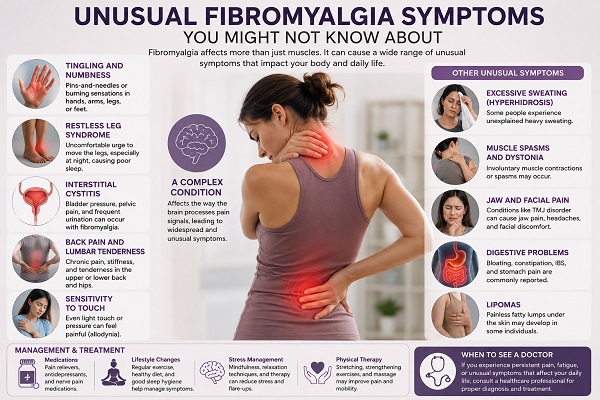
Unusual Fibromyalgia Symptoms
Fibromyalgia is a long-term condition that affects millions of people worldwide. It is commonly linked to widespread body pain, fatigue, sleep disturbances, and difficulty concentrating. However, some individuals also experience less common symptoms that can make diagnosis more challenging.
Understanding these unusual signs may help people recognize the condition earlier and seek appropriate medical support. While fibromyalgia cannot currently be cured, many treatments and lifestyle changes can help manage symptoms and improve daily life.
What Is Fibromyalgia?
Fibromyalgia is a chronic disorder that affects how the brain and nervous system process pain signals. People with this condition often experience persistent muscle pain, tiredness, stiffness, and cognitive issues sometimes called “fibro fog.”
According to the Centers for Disease Control and Prevention, fibromyalgia affects millions of adults and is more common in women than men.
Although pain is the primary symptom, fibromyalgia may also trigger several unusual or unexpected health problems.
Tingling and Numbness in the Hands and Feet
Some people with fibromyalgia experience tingling, burning, or numb sensations in their arms, hands, legs, or feet. This condition is known as paresthesia.
These sensations may happen because the nervous system becomes overly sensitive, causing nerves to react more strongly than normal. Symptoms can include:
- Pins-and-needles feelings
- Burning sensations
- Temporary numbness
- Sharp or electric-like pain
Ways to Manage It
Treatment usually focuses on controlling nerve pain and reducing inflammation. Doctors may recommend:
- Prescription medications for nerve pain
- Over-the-counter pain relievers
- Topical creams or gels
- Gentle stretching and exercise
Applying heat or cold packs at home may also provide temporary relief.
Restless Leg Syndrome and Fibromyalgia
Restless leg syndrome (RLS) is another condition frequently reported by people with fibromyalgia. It creates an uncomfortable urge to move the legs, especially during rest or at night.
Symptoms may include:
- Itching or crawling sensations in the legs
- Throbbing discomfort
- Difficulty sleeping
- Frequent nighttime movement
Sleep problems are already common in fibromyalgia, and RLS can make fatigue even worse.
Treatment and Self-Care
Doctors may suggest:
- Iron supplements if iron levels are low
- Certain anti-seizure medications
- Muscle relaxants or sleep medications
- Lifestyle habits can also help:
- Avoiding caffeine, smoking, and alcohol
- Maintaining a consistent sleep routine
- Exercising regularly
- Taking warm baths before bedtime
Interstitial Cystitis and Bladder Discomfort

Interstitial cystitis (IC), also called painful bladder syndrome, may occur alongside fibromyalgia. This condition causes bladder pressure, pelvic pain, and frequent urination.
Although the exact cause remains unclear, stress and inflammation may contribute to symptoms.
Common Symptoms
- Pelvic discomfort
- Frequent need to urinate
- Pain during bladder filling
- Pressure in the lower abdomen
Treatment Options
Treatment plans vary depending on symptom severity and may include:
- Pelvic floor therapy
- Bladder training exercises
- Medications to reduce discomfort
- Stress management techniques
Drinking enough water and staying physically active may also support bladder health.
Chronic Back Pain and Lumbar Tenderness
Back pain is another symptom that many people with fibromyalgia report. Some experience tenderness around the lower spine, often called paraspinal lumbar tenderness.
The pain may:
- Affect the upper or lower back
- Spread into the hips or buttocks
- Feel stiff or sore in the morning
- Worsen after physical activity or stress
Managing Back Pain
Depending on severity, treatments may include:
- Prescription pain medications
- Physical therapy
- Massage therapy
- Acupuncture
- Chiropractic care
At-home relief methods such as heating pads and gentle stretching can also help reduce discomfort.
Increased Sensitivity to Touch
Some individuals with fibromyalgia develop allodynia, a condition where normal touch feels painful. Even mild pressure from clothing, blankets, or a gentle tap may cause discomfort.
Researchers believe this happens because the nervous system misinterprets harmless sensations as pain signals.
Symptoms of Allodynia
- Pain from light touch
- Sensitivity to temperature changes
- Discomfort from tight clothing
- Burning or aching skin sensations
Treatment Approaches
Management may involve:
- Pain-relieving medications
- Physical therapy
- Counseling or psychological support
- Stress reduction techniques
Learning stress-management strategies can help reduce symptom flare-ups over time.
Other Unusual Fibromyalgia Symptoms
Fibromyalgia affects people differently, and some individuals may notice unusual symptoms beyond widespread pain and fatigue.
These may include:
Excessive Sweating
Some people develop hyperhidrosis, or excessive sweating, due to nervous system dysfunction.
Muscle Spasms and Stiffness
Painful muscle tightness or involuntary spasms can occur in different parts of the body.
Jaw and Facial Pain
Fibromyalgia may contribute to jaw discomfort or temporomandibular joint (TMJ) problems, leading to headaches and facial pain.
Digestive Problems
Digestive symptoms are also common and may include:
- Bloating
- Constipation
- Stomach cramps
- Irritable bowel syndrome (IBS)
Fatty Lumps Under the Skin
Some individuals notice soft fatty lumps called lipomas, though they are not dangerous in most cases.
Conditions Commonly Mistaken for Fibromyalgia
Fibromyalgia shares symptoms with several other medical conditions, which can sometimes delay diagnosis.
Conditions with similar symptoms include:
- Rheumatoid Arthritis
- Lyme Disease
- Obstructive Sleep Apnea
- Chronic fatigue syndrome
- Lupus
Because symptoms overlap, doctors often perform multiple tests before confirming fibromyalgia.
How Severe Can Fibromyalgia Become?
Fibromyalgia can significantly affect a person’s quality of life. Persistent pain, sleep problems, and fatigue may interfere with work, relationships, and daily activities.
Many people also experience emotional challenges such as anxiety, stress, or depression alongside physical symptoms.
The severity varies widely from person to person. Some individuals experience mild symptoms, while others may struggle with frequent flare-ups and chronic exhaustion.
Which Unusual Fibromyalgia Symptoms Are the Most Difficult?
There is no single “worst” symptom because experiences differ for everyone. However, many people report that ongoing fatigue is one of the hardest symptoms to manage.
Chronic exhaustion may lead to:
- Reduced concentration
- Low energy levels
- Difficulty completing daily tasks
- Poor sleep quality
Pain flare-ups and mental fog can also become overwhelming during stressful periods.
When to See a Doctor
It is important to speak with a healthcare professional if you experience:
- Ongoing widespread pain
- Persistent fatigue
- Sleep disturbances
- Tingling or numbness
- Unexplained sensitivity to touch
Early diagnosis and treatment may help reduce symptom severity and improve overall well-being.
Final Thoughts
Fibromyalgia can cause far more than muscle pain and tiredness. Symptoms such as tingling, restless legs, bladder discomfort, touch sensitivity, and digestive issues may also be linked to the condition.
Because fibromyalgia affects each person differently, treatment usually involves a combination of medical care, lifestyle adjustments, stress management, and regular physical activity.
If unusual symptoms continue or interfere with daily life, seeking professional medical advice is the best step toward proper diagnosis and long-term symptom management.